Historic bungalow rafters in Midtown, Curtis Park, and East Sacramento often reveal compromised roof junctions where roof rats (*Rattus rattus*) enter from adjacent tree canopies. Attic biosecurity remediation restores…
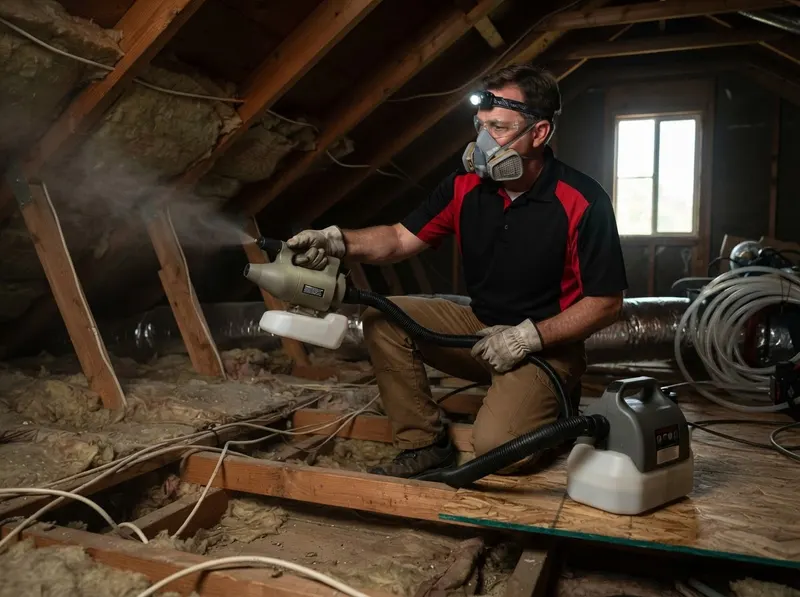
Historic bungalow rafters in Midtown, Curtis Park, and East Sacramento often reveal compromised roof junctions where roof rats (*Rattus rattus*) enter from adjacent tree canopies. Attic biosecurity remediation restores environmental safety without circulating pesticide fumes through living areas below. The process relies on negative-air containment machines fitted with HEPA filters rated at 99.97% retention down to 0.3 microns, preventing fecal spores from entering HVAC registers during extraction. Technicians physically remove contaminated blown cellulose or fiberglass batts, vacuum biological particulate matter, and apply an EPA-registered hospital-grade botanical disinfectant using ultra-low-volume cold fogging. This neutralizes latent pathogens such as *Leptospira* bacteria and hantavirus antigens while breaking down pest scent trails that guide incoming colonies.
In suburban ranch and split-level footprints across Pocket-Greenhaven, Natomas, and Arden-Arcade, builders historically installed passive ridge vents and open-soffit construction that facilitate rodent access. Rather than maintaining continuous chemical bait boxes that leave rodents to perish inside structural cavities, our process prioritizes physical building science. Every exterior access void larger than 0.25 inches is sealed using 16-gauge galvanized steel hardware cloth and expanding polyurethane fire-block foam. The technical trade-off involves labor allocation: physical restoration demands a higher upfront investment than recurring poison programs, but eliminates persistent carcass odor, ceiling staining, and thermal insulation loss.
Contaminated attics directly degrade interior domestic hygiene because rising heat creates a stack effect, pulling up to 40% of ground-floor indoor air directly through attic penetrations, recessed can lights, and chase walls. Diagnostic thermal imaging tracks heat loss across ceiling joists in older Oak Park and Tahoe Park homes to pinpoint void zones where rodent activity has compressed or cleared the R-38 thermal blanket. After biological clearing, fresh formaldehyde-free insulation is blown to restore structural thermal resistance. Homeowners remain safely on the property throughout the mechanical decontamination process, as no organophosphates or synthetic pyrethroid sprays are introduced into the air plenum.
Every job gets a firm, written price after a free on-site visit.
Tell us about your attic biosecurity remediation and sanitization job in Sacramento and we'll send a clear, written quote, usually the same day.
 Orlena Pest Specialists